
News from October 12, 2026
Construction Begins on the Pfaffensteig Tunnel: Expansion of the Gäubahn Proceeds
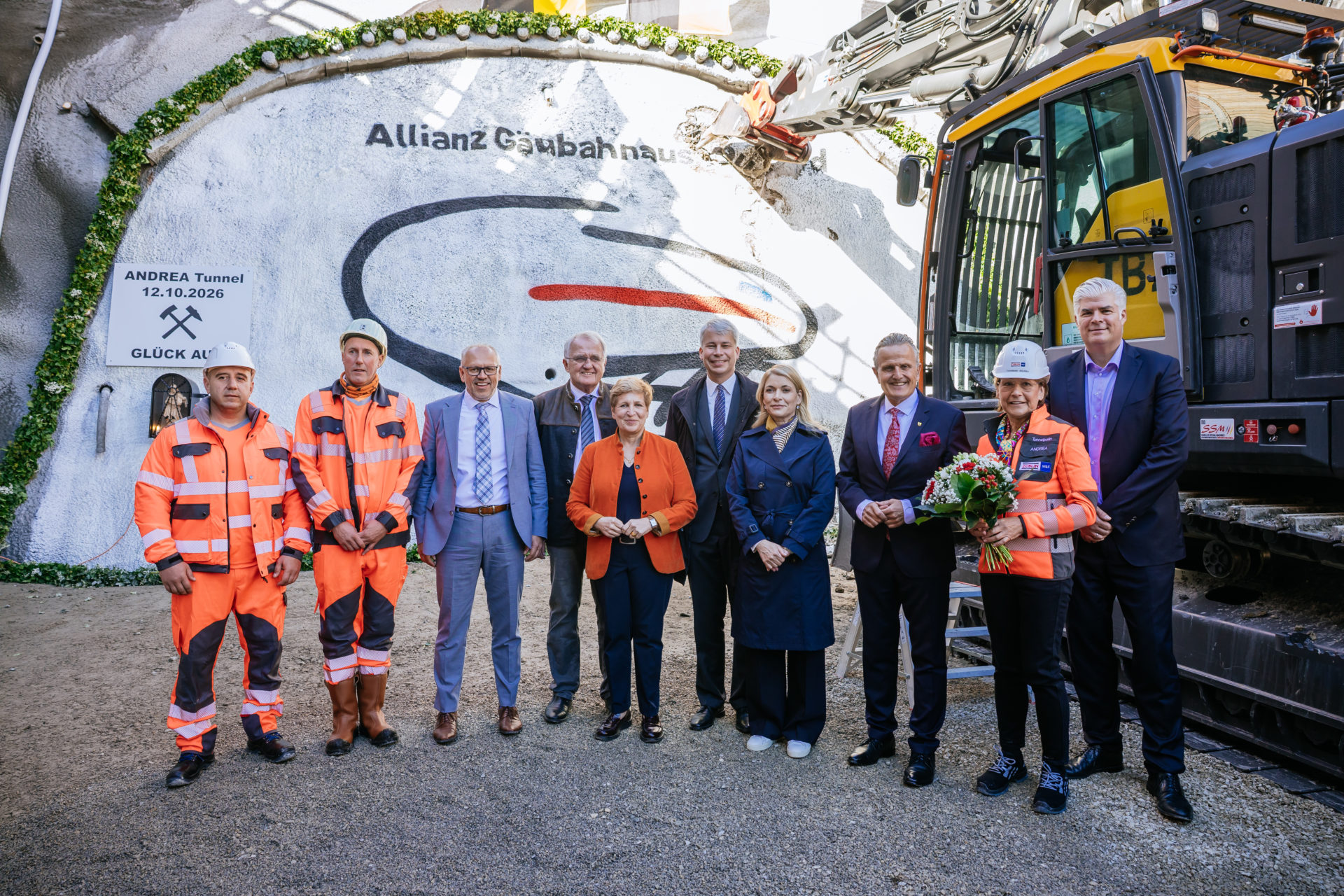
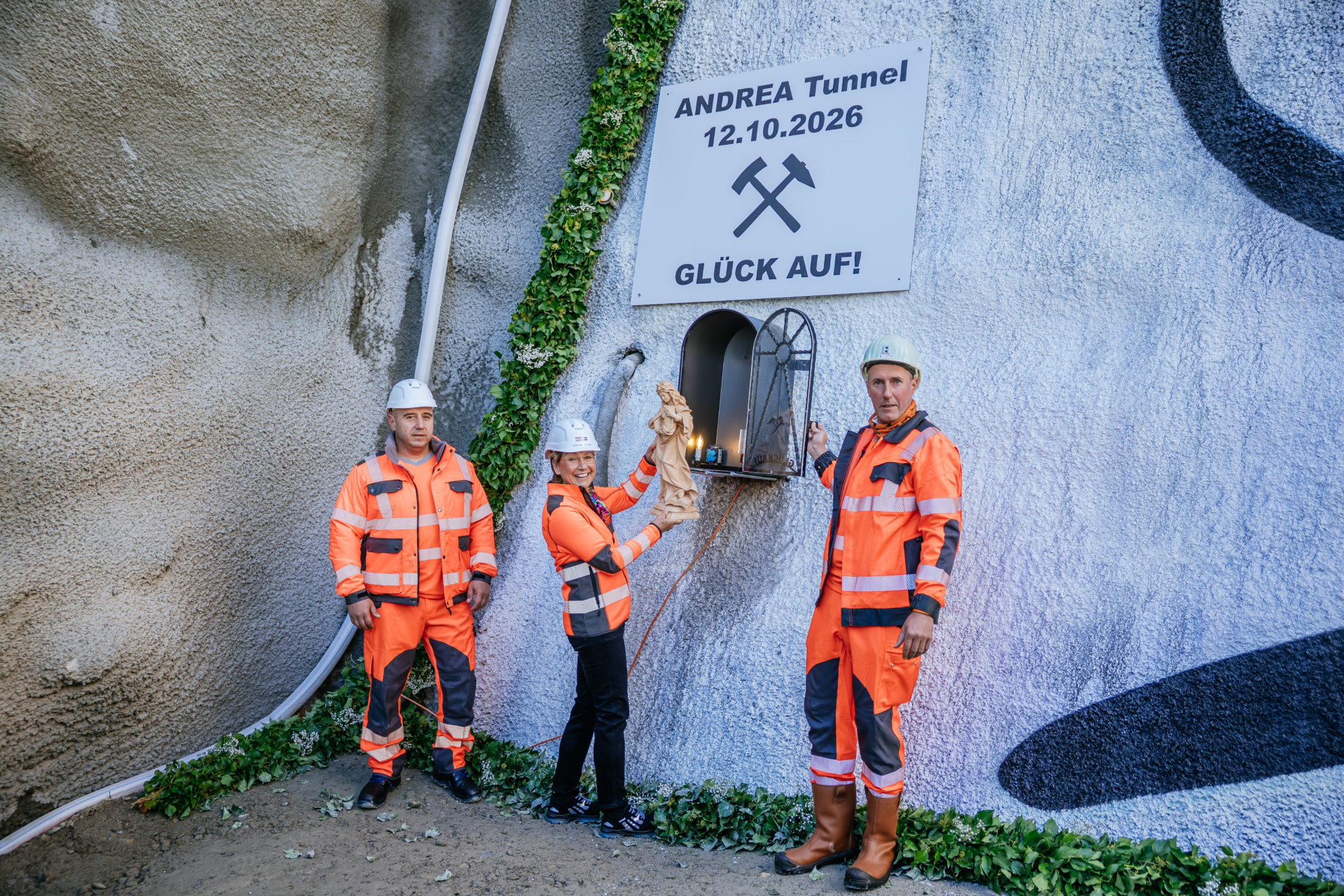
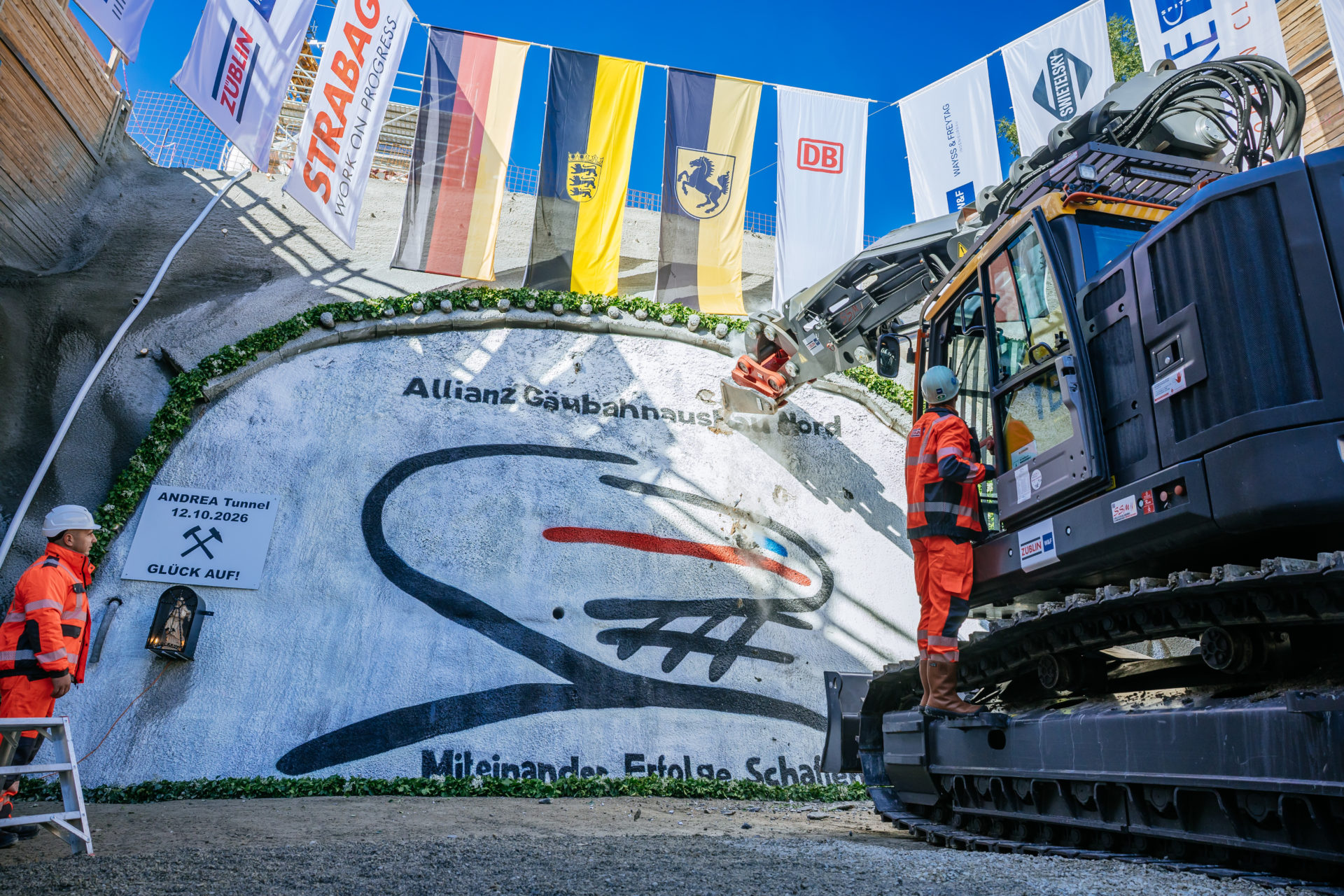
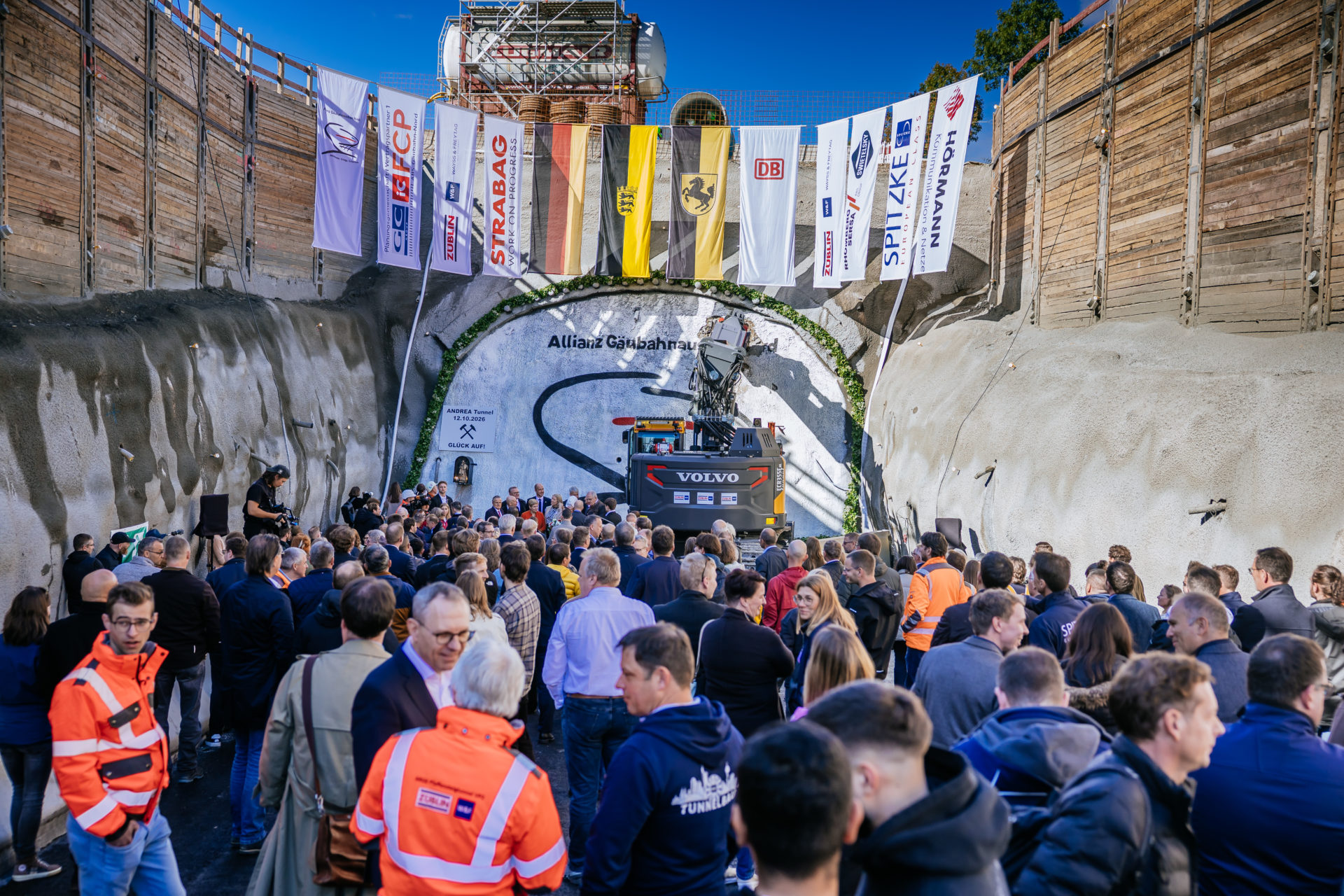
With a symbolic groundbreaking ceremony on Monday, October 12, 2026, Deutsche Bahn, together with many partners, began construction of the Pfaffensteig Tunnel. Starting in 2033, it will connect the Gäubahn—running to and from Zurich—with the Stuttgart 21 infrastructure. What makes the construction of the approximately 11-kilometer-long tunnel and the subsequent roughly 3-kilometer-long rail line between the tunnel and Böblingen unique is that the new infrastructure is being built under the so-called “Rail Partnership Model.” Under this model, Deutsche Bahn and its alliance partners plan and build everything together from day one and also share responsibility for the schedule and costs.
Evelyn Palla, CEO of DB AG: „The Pfaffensteig Tunnel doesn’t just save travel time. It frees up time for people. Anyone who commutes every day knows how valuable every minute is. With this project, we’re bringing the region closer together and improving connections to the airport and long-distance rail service. At the same time, today’s groundbreaking shows that major infrastructure projects can become a reality faster when all stakeholders take joint responsibility.“
Steffen Bilger, Federal Minister of Transportation: „From the initial concept to today’s groundbreaking, I’ve had the privilege of accompanying and driving forward the Pfaffenstein Tunnel project over many years. That’s why this day is also very special to me personally. Our goal was clear from the start: We want an efficient Gäubahn, faster connections between Stuttgart and Zurich, and better connections for travelers throughout the region. With the Pfaffensteig Tunnel, we’re creating a key prerequisite for this and making the Gäubahn ready for the Deutschlandtakt. The fact that what was once just an idea is now becoming a concrete piece of infrastructure shows that it pays to be persistent with important rail projects and to move forward together.“
Nicole Razavi, State Minister of Transportation for Baden-Württemberg: „The Pfaffensteig Tunnel is a key component of a modern, efficient, and safe rail infrastructure in Baden-Württemberg. Fast rail connections from Switzerland, Lake Constance, and the Gäu region to the airport and the state capital benefit commuters, business travelers, vacationers, and the economy of Baden-Württemberg. While we are delighted about the construction, it is important that the impact on operations during the construction phase be minimized and closely coordinated with the responsible authorities and local governments. I believe DB has a responsibility here.“
Dr. Frank Nopper, Lord Mayor of the state capital Stuttgart: „The Pfaffensteig Tunnel paves the way for better rail connections for the city, the region, and the state: It makes rail travel to and from the south more attractive, as it shortens travel times and directly connects the airport and the trade fair grounds to the Gäubahn.“
Rainer Wieland, Chairman of the Stuttgart Region Association: „With the Pfaffensteig Tunnel, there will continue to be no mixed-use traffic on the S-Bahn line between Rohr and the airport. This will have a positive impact on the S-Bahn’s operational quality. In addition, commuters from Böblingen and Herrenberg will reach Stuttgart Central Station much faster. The Pfaffensteig Tunnel will fully connect not only the southern part of the region but also the southern part of Baden-Württemberg to the new Stuttgart Airport mobility hub. At the same time, it opens up new opportunities for the expansion of the S-Bahn: The Panoramabahn can thus be used in the future for the planned S7 line from Heimerdingen to Stuttgart-Vaihingen.“
Stefan Kratochwill, Chairman of the Executive Board of STRABAG SE: „The Pfaffensteig Tunnel is a project that places the highest demands on planning, coordination, and construction. Today’s tunnel breakthrough marks the transition from intensive joint preparation to visible implementation. Together with Deutsche Bahn and our partners, we are relying on state-of-the-art tunnel-building technology, digital planning methods, and a collaborative approach to project management. In this way, we are laying the foundation to carry out this complex construction project efficiently, with an eye toward the future, and to a high standard of workmanship.“
Commissioning in 2033
The goal of the Rail Partnership Model is to complete complex large-scale projects more quickly and cost-effectively. In contrast to the conventional approach used for large-scale projects to date, DB, together with its alliance partners FCP, Geoconsult, Hörmann, iC-Consulenten, Rhomberg Bahntechnik, Spitzke, Strabag, Swietelsky, Wayss & Freytag, and Züblin, has developed a cross-trade schedule in addition to the design and permitting plans. Time and budget risks were jointly identified, assessed, and factored into the schedule and cost framework. Passengers are expected to be able to use the new tunnel starting in 2033.
The Pfaffensteig Tunnel Connects the Gäubahn to Stuttgart 21
The expansion of the Gäubahn—and thus also the construction of the Pfaffensteig Tunnel—is listed as a priority in the Federal Rail Network Plan. Consequently, as part of the Federal Rail Network Expansion Act, the Pfaffensteig Tunnel is in the „overriding public interest.“ The federal government and DB InfraGO AG agreed on the construction of the project at the end of 2025.
The Pfaffensteig Tunnel will connect the Gäubahn to the airport and, further on, to the future Stuttgart Central Station. The tunnel thus also fulfills a significant part of the financing agreement concluded by the Stuttgart 21 project partners.
The tunnel will reduce travel time between Stuttgart and Zurich by about 15 minutes. This will also improve connections along the route. Many passengers will also benefit from the fact that the travel time between Böblingen and the airport will be reduced from 22 minutes today to about 7 minutes in the future. In addition, passengers traveling on the Gäubahn will soon be able to conveniently transfer at the airport to fast connections toward Ulm and Munich—and vice versa.
Planning for the Gäubahn Expansion North project, which includes the Pfaffensteig Tunnel, is divided into sections. The construction permit issued for Planning Approval Section (PFA) 1 at the end of 2025 covers the 10.8-kilometer section of the Pfaffensteig Tunnel to be excavated using mining methods. PFA 2 includes the approximately 300-meter-long section of the Pfaffensteig Tunnel to be constructed using open-cut methods, followed by the approximately 3-kilometer-long above-ground section of track leading to the Goldberg S-Bahn station, located between Böblingen and Sindelfingen. Deutsche Bahn submitted the planning approval documents for the second project section to the Federal Railway Authority (EBA) in April 2025. Today’s symbolic groundbreaking ceremony took place at the future emergency tunnel of the Pfaffensteig Tunnel in the presence of tunnel patron Andrea Klett-Eininger.
Numbers, Data, Facts
· Length of the Pfaffensteig Tunnel: about 11 kilometers
· Length of mechanized tunneling: approximately 9.8 kilometers
· Length of conventional tunneling: approximately 1 kilometer
· Length of the open-cut section: approximately 300 meters
· Length of the above-ground section: about three kilometers
Chronology
· October 18, 2021: DB Projekt Stuttgart–Ulm GmbH was commissioned to conduct preliminary planning for the Pfaffensteig Tunnel
· July 18, 2022: The S21 Steering Committee votes in favor of the Pfaffensteig Tunnel
· November 6, 2023: Launch of the rail partnership model; signing of the multiparty agreement
· April 5, 2024: DB submits the planning approval documents for Phase 1 to the Federal Railway Authority
· April 7, 2025: DB submits the planning approval documents for Phase 2 to the Federal Railway Authority
· December 18, 2025: The federal government and Deutsche Bahn sign the financing agreement for the construction of the Pfaffensteig Tunnel
· December 22, 2025: The Federal Railway Authority issues the planning approval decision for PFA 1
· February 9, 2026: Start of preparatory work
· October 12, 2026: Symbolic start of tunnel boring